Event Date: September 7, 2019
Client: London College of Fashion
Location: Arcade East, London College of Fashion, London
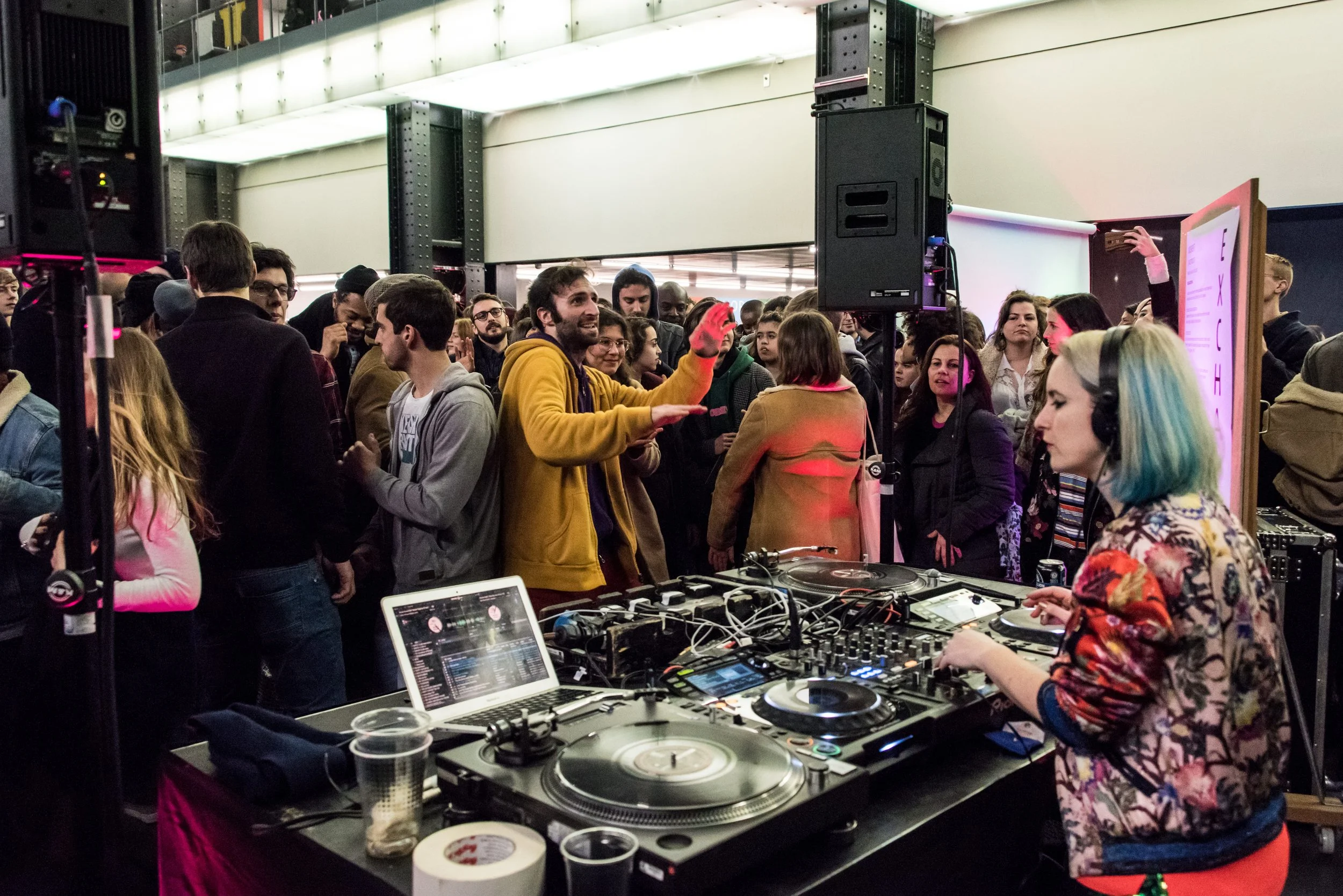
Challenge: Respond to London College of Fashion’s broad Design and Politics brief by conceiving, curating, and producing an original public takeover event exploring nightclubs as spaces of counterculture, resistance, design, identity, music, and social change.
Impact: Delivered an immersive afternoon of talks, music, readings, visuals, performance, and workshops, bringing together artists, academics, activists, musicians, DJs, writers, educators, and cultural leaders to examine the political and creative power of club culture.
Overview
Commissioned by London College of Fashion to devise and present an original event in response to Arcade East’s 2019 Design and Politics season. I conceived Nightclubs: Counterculture & Resistance by Stance Podcast, developing the concept from the broad Design and Politics brief and shaping it into a public programme exploring how nightclubs have shaped identity, resistance, subculture, music, design, and community.
London College of Fashion is a globally recognised institution at the intersection of fashion, design, culture, research, and social change. Through Stance Podcast, I created a takeover event that included two talks, Designing For the Night and Shutdown: Beats, Racism and Strife, alongside music, readings, visuals, performance, and a workshop.
Key Deliverables
Concept Development: Conceived the event theme, title, and curatorial approach in response to London College of Fashion’s Design and Politics brief.
Curation & Programming: Curated an interdisciplinary programme bringing together debate, music, performance, readings, visuals, and participatory workshop elements.
Speaker & Artist Programming: Brought together a strong cross-disciplinary line-up including disability rights activist Josh Hepple, design historian Dr Catharine Rossi, educator Neil Pinder, writer Emma Warren, grime artist Marci Phonix, ballroom figure Kartel Brown, soundsystem culture representative Clive Curniffe, DJ Kaylee Kay, and workshop leader Callum Jack.
Cultural Framing: Positioned nightlife as a serious cultural and political site, exploring its links to racism, disability rights, LGBTQI+ culture, grime, ballroom, soundsystem culture, design, fashion, community, and resistance.
Audience Engagement: Created an interactive public event that invited audiences into lively debate, listening, movement, music, visual culture, and creative participation.
Event Production: Designed and delivered a multi-format takeover that balanced academic discussion, cultural storytelling, live music, performance, and community-facing programming.
Impact/Outcome
Cultural Relevance: Highlighted nightclubs as spaces where marginalised communities have gathered, created, resisted, organised, and shaped culture.
Interdisciplinary Dialogue: Connected fashion, politics, music, design history, activism, education, disability rights, race, queer culture, and youth culture within one public programme.
Audience Engagement: Created an energetic and accessible event format that moved beyond a conventional panel discussion, combining talks with music, readings, visuals, performance, and workshop activity.
Institutional Impact: Supported London College of Fashion’s Design and Politics season with a culturally rich, research-led and community-engaged programme.
Creative Leadership: Demonstrated Stance Podcast’s ability to respond to an institutional brief with an original cultural concept, then translate that concept into an intelligent, inclusive, immersive, and engaging public event.
“To be added”
Result
Delivered a successful London College of Fashion takeover conceived in response to the Design and Politics brief, exploring nightclubs as vital spaces of counterculture and resistance. The event strengthened Stance Podcast’s role as a cultural programming partner able to originate ideas, shape complex cultural themes, and bring together artists, academics, activists, musicians, and audiences around urgent conversations about design, politics, identity, and community.